Care. Housing. Education.

Three pillars. One provider.

Better outcomes, lower cost, clearer accountability.

What the sector is dealing with

Four problems that keep meeting each other.

They are usually handled separately, by different people, in different budgets. Inkfish exists because they are the same problem seen from four sides.

01

Residential provision

Too few places, in the wrong places, at prices that are set by scarcity rather than by need.

02

Transitional housing

Young people leaving care with nowhere designed for the step between a placement and a tenancy.

03

The gap around fostering

Children who cannot be fostered and do not need an institution, with nothing built for them in between.

04

Local authority finances

Budgets absorbed by a small number of very high cost placements, squeezing everything else.

Three pillars

One group, three kinds of work.

Care, housing and education carry equal weight here. They are commissioned separately, budgeted separately and inspected separately. A child experiences them as one thing.

Care

Inkfish Care

Capacity has grown. Stability has not. A sector that adds places faster than it adds continuity is solving the wrong problem.

16,200

registered children’s home places across 4,750 homes in England at 31 March 2026, including short-break-only homes.

Ofsted, Children’s social care in England 2026. Published 30 July 2026.
10%

of children looked after experienced three or more placements in the year ending 31 March 2025.

DfE, Stability measures for children looked after in England, reporting year 2025. Published 30 April 2026.

Our response

Specialist homes for emotional and behavioural difficulties (EBD) and for learning disability (LD). One home, two children, solo by default, each registered for one primary need.

Inkfish Care

Housing

Inkfish Homes

Independence is a design problem before it is a support problem. Most care leavers pass through housing that was adapted rather than intended.

36%

of 18-year-old care leavers were living in semi-independent transitional accommodation in 2025.

DfE, Children looked after in England including adoptions, reporting year 2025. Published 26 November 2025.
19%

of care leavers aged 19 to 21 were in the same accommodation, and 36% were living independently.

DfE, Children looked after in England including adoptions, reporting year 2025. Published 26 November 2025.

Our response

Property designed from the support model outwards, for the providers, authorities, housing associations and charities who run it.

Inkfish Homes

Education

Inkfish Education

Education is where a placement holds or falls apart. The needs of children in care are not a variation on the pupil population. They are a different distribution.

61.2%

of pupils looked after continuously for at least 12 months had special educational needs in 2025, against 19.2% of all pupils.

DfE, Outcomes for children in need, including children looked after, reporting year 2025. Published 2 April 2026.
33.9%

of the same cohort had an Education, Health and Care plan, against 5.3% of all pupils.

DfE, Outcomes for children in need, including children looked after, reporting year 2025. Published 2 April 2026.

Our response

The education pathway planned with the home rather than after it, alongside schools, SEND teams and Virtual School Heads.

Figures describe England as a whole, from the most recent Department for Education and Ofsted releases, with the publication date beside each one. Sources checked 29 September 2026.

30

The programme

We are building thirty homes, one at a time.

Thirty small specialist homes, EBD and LD, rather than one large one, each opening on its own terms. The model does not change with scale, and the pace is set by the quality of the team we can recruit, not by the property we can buy.

Working with commissioners

We would rather start with the child than the vacancy.

Our starting point is the young person: the home they need, the education that helps them progress, and the support that prepares them for their next step. We welcome collaboration with Regional Care Cooperatives, local authorities and regional commissioning partnerships to shape provision around identified needs.

Education

Planned with education and SEND teams, Virtual School Heads, schools and colleges, before a child arrives rather than after.

Specialist EBD and LD homes

Matched carefully to one primary need, with an honest answer when a home is not right for a child.

Transitional housing

Coordinated with leaving-care and housing services, so a move towards independence is prepared rather than timed by a birthday.

Commissioning conversations should begin with need, suitability and intended outcomes. Ours do.

Evaluation

We would rather be measured than believed.

Children’s services carry decisions that are hard to reverse and easy to justify after the event. The discipline that prevents it is ordinary: decide what good looks like before a child arrives, measure it honestly, and let the evidence change what you do next.

Baseline before we start

A placement begins with a written baseline against the care plan and the education plan, so progress is measured from a known starting point rather than remembered afterwards.

The same measures every time

Measures are defined before a service opens, not chosen once the results are in. Stable measures make comparison possible across homes, across years and across providers.

Reported to the people who placed

Our commitment is to report progress to the placing authority on an agreed cycle, including, and especially, where a child is not progressing.

Open to scrutiny we do not control

We would rather an evaluation that can embarrass us than one that cannot. Where a commissioning partner wants independent or academic evaluation of a service, we will support it and share the data.

A sector that cannot measure itself cannot improve. We intend to be measurable.

Why one group

A child does not experience housing, care and education as separate services. We stopped running them as though they were.

Better outcomes

The building, the team and the education plan are designed against the same brief, rather than assembled after a child has arrived.

Lower cost

Owning the property and the operating model removes a layer of margin, and takes the pressure off placing a second child for the wrong reasons.

Clearer accountability

One group to hold to account, with each division named, registered where it must be, and answerable for its own part.

Our story

In 2019, 233,006 people sent him to Brussels.

By then Louis Stedman-Bryce had already worked on the problem from more than one side: evaluating what works, running a care service, and building homes. Inkfish is where those sides finally meet.

Louis Stedman-Bryce being interviewed in the Sky News studio
Sky News, London
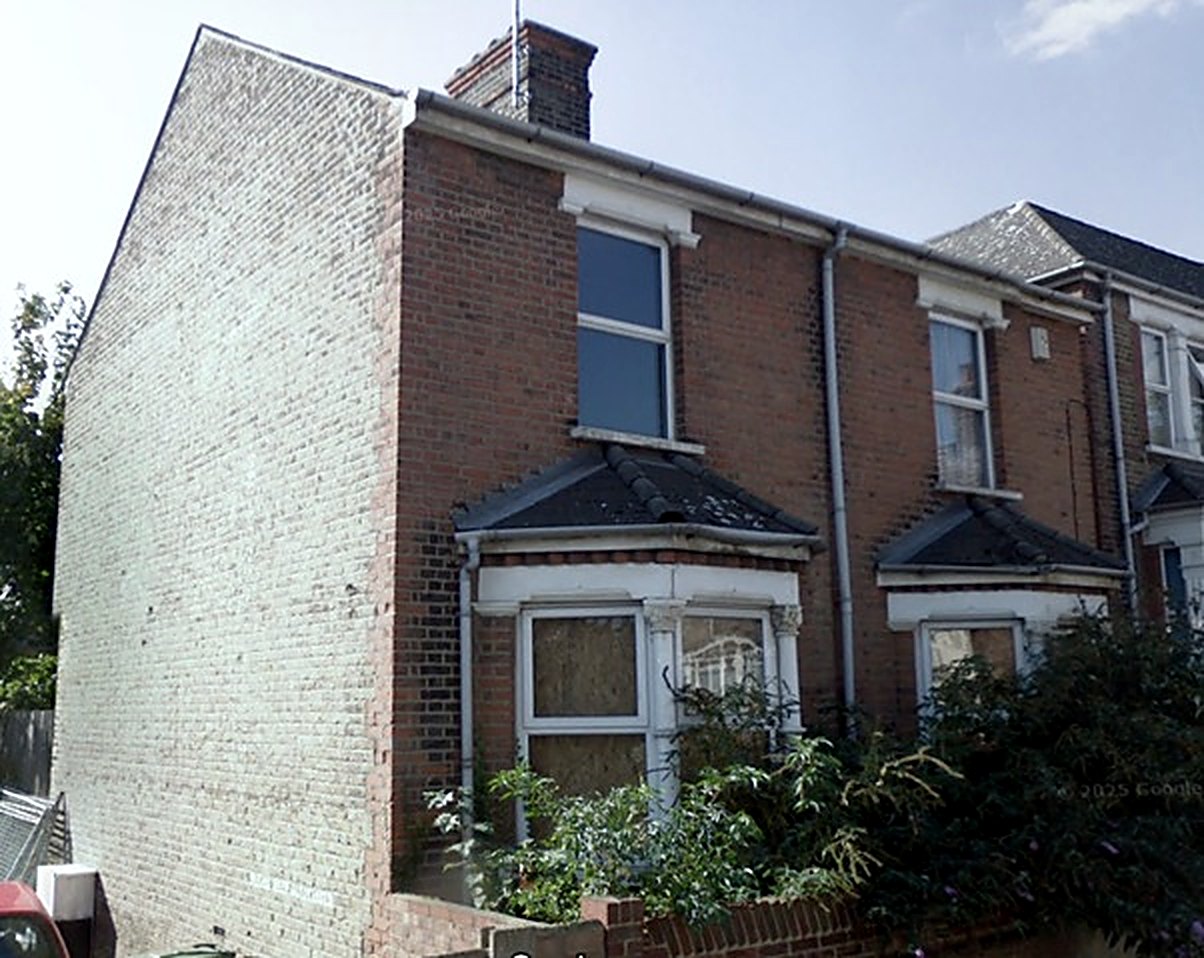
An end of terrace house with boarded up bay windows, the children’s home Louis was placed in at fifteen
“I was 15 when I was placed in the home in this photograph.”

Where this starts

“I can’t change it, but I can use it to help build something very different.”

Louis Stedman-BryceFounder, Inkfish Group

A personal note from Louis

The house Louis was placed in at fifteen, since demolished

I was 15 when I was placed in the home in this photograph. It has since been demolished, but I still remember what it felt like to arrive there and realise this was now supposed to be my home.

That experience has never left me. I can’t change it, but I can use it to help build something very different.

What I understand now is that where a child lives, who looks after them and what they learn are decided by different people, in different budgets, at different times. The child experiences them as one life.

That is why Inkfish is more than a care company. Care, housing and education sit together here because they belong together. But Inkfish isn’t about me. It’s about what we build together.

We want every home to feel like a home, every move towards independence to be planned rather than timed by a birthday, and every child’s education to be part of the plan from the start.

We can’t change what happened before a child reaches us.
But together, we can help change what happens next.

Louis Stedman-BryceFounder, Inkfish Group

Every side of the problem

Four vantage points. One group.

The problems Inkfish exists to solve are usually seen from one side at a time. Louis has worked on each of them from a different one.

Care

Registered Manager

Led the acquisition of a long-established Scottish community care provider in 2016, then stepped in as its Registered Manager.

Housing

Homes that were built to purpose

Developed children’s homes and supported housing schemes with funds including Triple Point and Civitas.

Evidence

Measuring what works

Co-owned a monitoring and evaluation practice working with international NGOs, alongside frontline teams in Kenya, Zambia, Peru and Jordan.

Policy

European Parliament

Represented the UK on Development and on Security and Defence, and has raised children’s services across Westminster and the House of Lords ever since.

For several years Louis has put the state of children’s services on the record, with colleagues in both Houses and on national broadcast media including Sky News and TalkTV.

He is the ambassador for Inkfish. The work stands on its own.

Contact

Start with the problem. We will point you to the right part.

Placing a child

Referrals, matching and the Commissioner Pack sit with Inkfish Care.

Inkfish Care

Property and schemes

Sites, buildings and development partnerships sit with Inkfish Homes.

Inkfish Homes

Anything else

Media, partnerships, investment and everything that spans the group.

hello@inkfishgroup.com
Forder House, the Inkfish head office in Brighton

Head office

Forder House.

1 Trafalgar Court, Brighton BN1 4FB. Telephone 01273 569 396.

Every Inkfish company is registered and trades from here: Inkfish Group, Inkfish Care and Inkfish Homes.